
〰️
Autumn - ASK
〰️
Spring - INVESTIGATE
〰️
Summer - SHARE
〰️ Autumn - ASK 〰️ Spring - INVESTIGATE 〰️ Summer - SHARE
Why does rain smell different from freshly cut grass? Why do some sounds seem louder than others? Why do some materials feel colder than others?
Turn these everyday questions into meaningful scientific enquiry through GSSfS.
The 2027 theme, Sensory Science, invites pupils to explore science through their senses. By using sight, sound, touch, smell and, where appropriate, taste, pupils notice both the obvious and the less obvious features of their surroundings, and can generate meaningful scientific questions that inspire them to Ask, Investigate and Share!
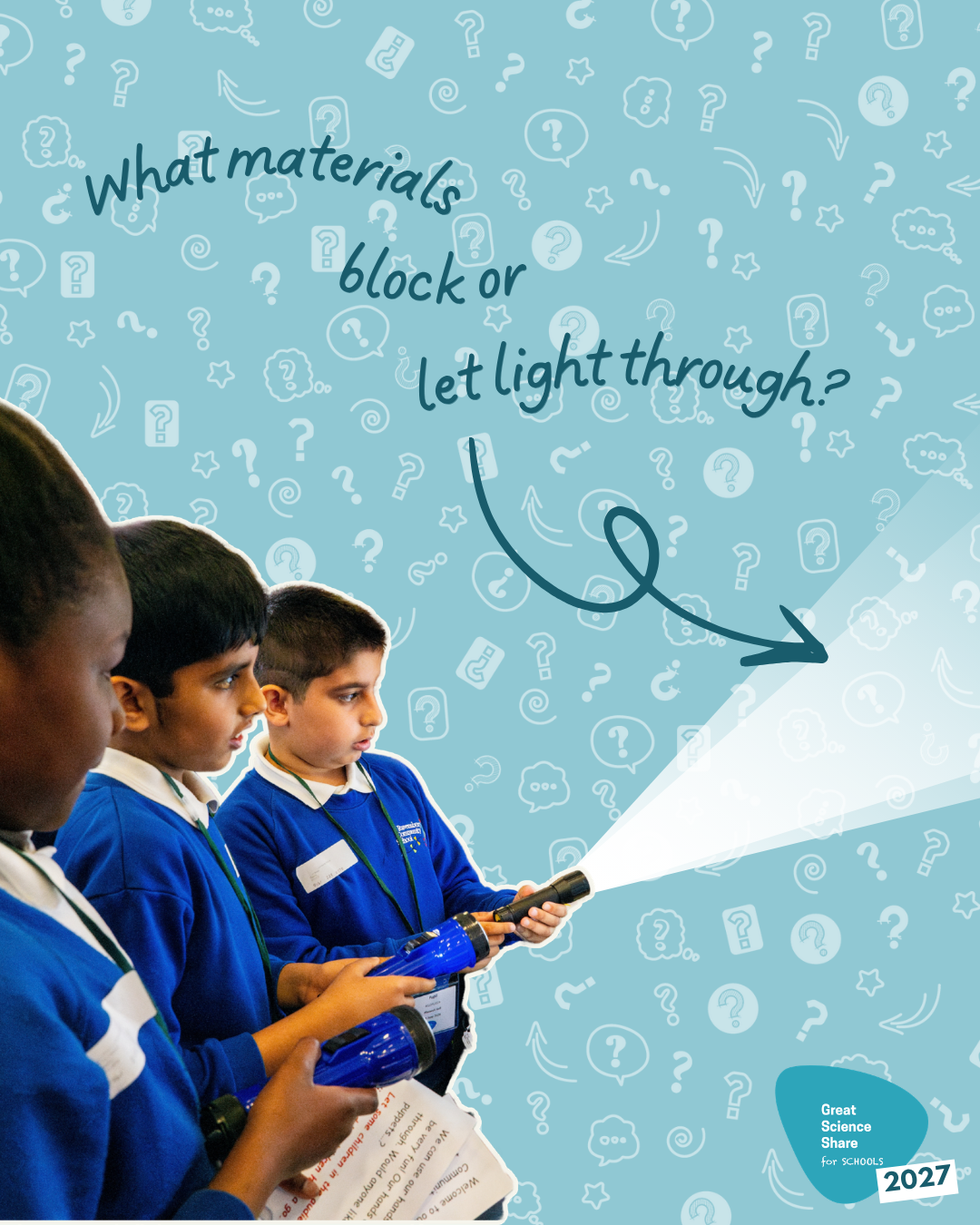
This focus on noticing encourages children to observe closely, compare, identify patterns, and sort and group objects and materials, developing their key science enquiry skills. Through sensory exploration, pupils become curious about the world around them, building the confidence to ask questions, gather evidence and communicate their discoveries with others.
By nurturing curiosity and creating opportunities for discussion, exploration and evidence gathering, you can help inspire the next generation of scientists, engineers and problem-solvers.
What happens when we slow down and explore the world through our senses?...
We're excited to discover the questions that Sensory Science will inspire in classrooms around the world. Over to you!


Brand new Great Guided Enquiries on the theme of ‘Sensory Science’ are coming later in the year! In the meantime, why not start with these enquiries that get young people engaging their senses to Ask, Investigate and Share? Available now, ready-to-deliver, downloadable resources.
Be your own Rock Reporters! Observing and describing rocks, for 5-7 year-olds.

Use sensory and practical experiences to explore air resistance, for 5-7, 7-11 and 11-14 year-olds.

Explore biodiversity and life on land through observation, for 5-7, 7-11 and 11-14 year-olds.

Notice how components effect outputs in different ways, for 5-7, 7-11 and 11-14 year-olds.
GSSfS works in partnership with British Science Week to support as much great science enquiry as possible!
Adapt the timing of your Great Science Share for Schools activity to suit your school
Sensory Science is a truly inclusive theme suited to all learning settings across the globe, exemplifying the GSSfS values of being learner-focussed, inclusive, and non-competitive. We recognise that schools across the world will decide what’s best for them. The key is that there is ample time to practically investigate, gather evidence, interpret it and share it.


