Three Great Guided Enquiries inspire young people to ask, investigate and share scientific questions. Animal Action resources are linked to the story ‘The Most Important Animal of All’ written by Penny Worms, illustrated by Hannah Bailey.
They provide teacher notes, slide decks, a story read video and links to GSSfS resources guiding pupils to work scientifically.
Animal Action guides pupils to use their knowledge of animal features to collect data, increase pollinators and investigate animals that improve soil quality.
Age: 5-7, 7-11, 11-14 years
Curriculum topics: observing over time; prediction/ hypothesis; animals.
Cross-curricular: English, art, geography and PSHE.

Listen to the story, ‘The Most Important Animal of All’, read by the author, Penny Worms.

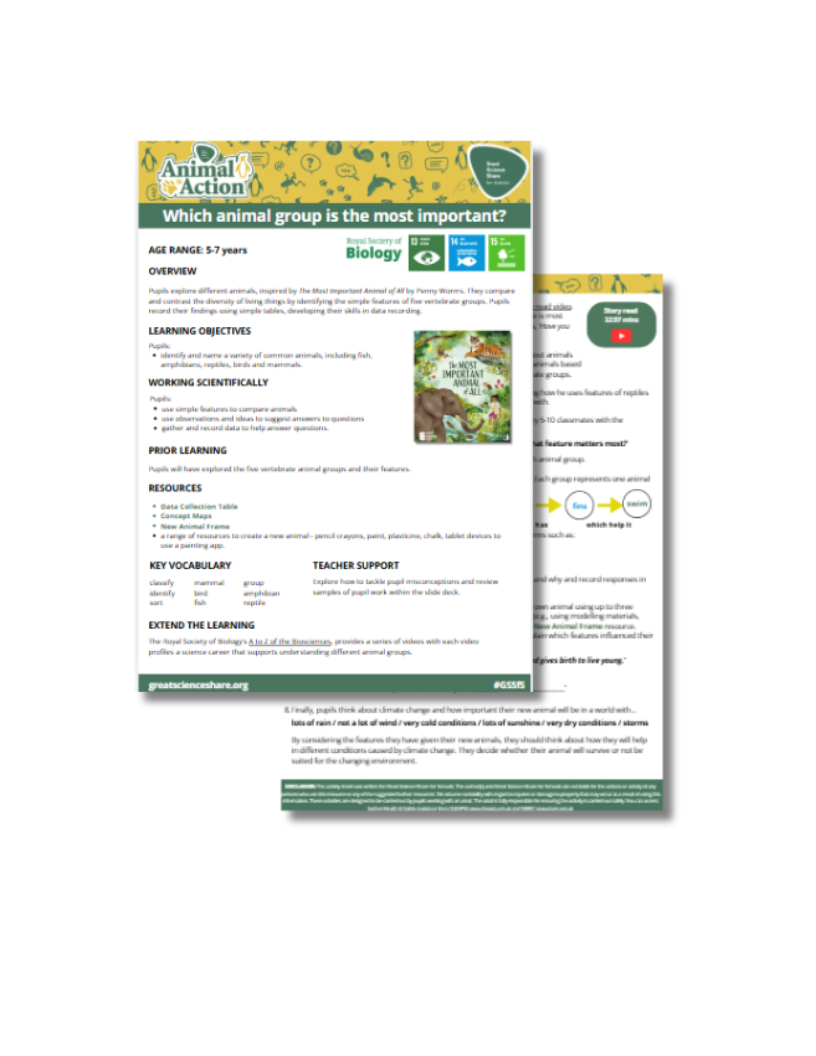
Which animal group is the most important?

Pupils:
use simple features to compare animals
use observations and ideas to suggest answers to questions
gather and record data to help answer questions.
Pupils explore different animals, inspired by The Most Important Animal of All by Penny Worms. They compare and contrast the diversity of living things by identifying the simple features of five vertebrate groups. Pupils record their findings using simple tables, developing their skills in data recording.

How do the smallest animals make
the biggest difference?
Pupils:
report and present findings, including conclusions
Pupils investigate how some of the smallest animals in the world make a big difference to the way we live. They plan and investigate how to observe or increase the number of pollinators in their local environment. They develop the skills of working together, having different roles, to explore how pollinators can support food production and think about the implications of the reduction of pollinators globally. They apply their knowledge of plant life cycles and draw conclusions, justifying their reasoning based on evidence.
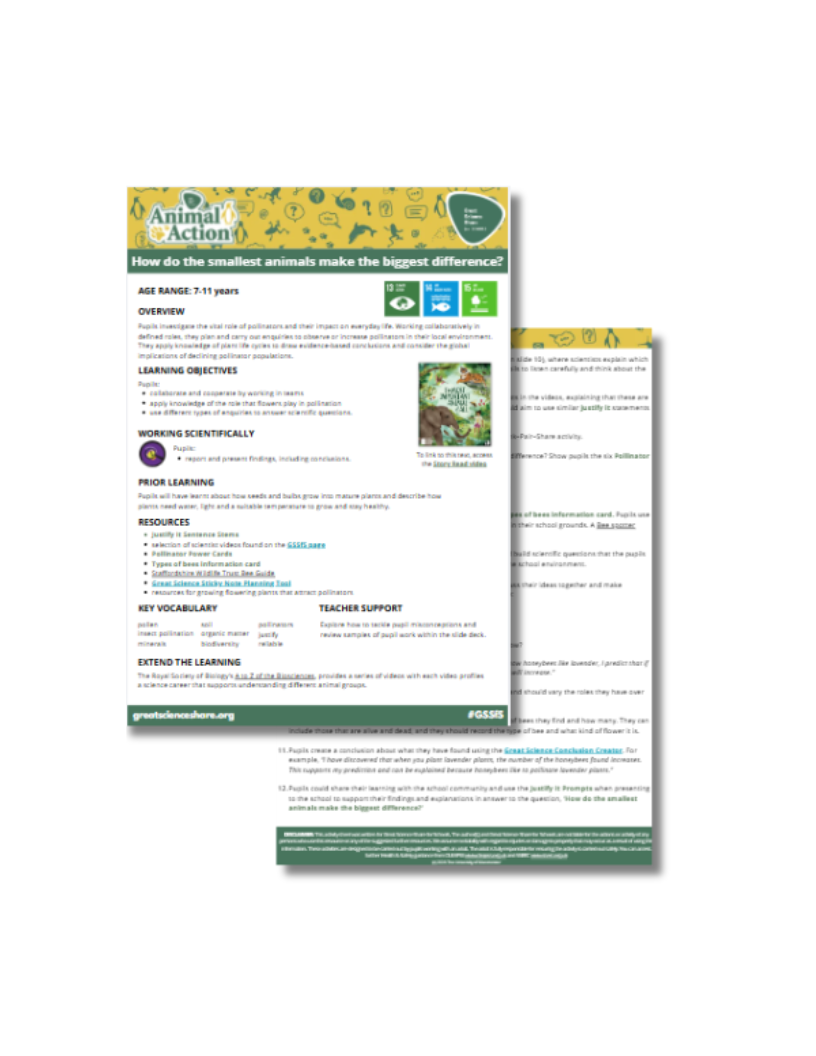

How do the smallest animals make the biggest difference?
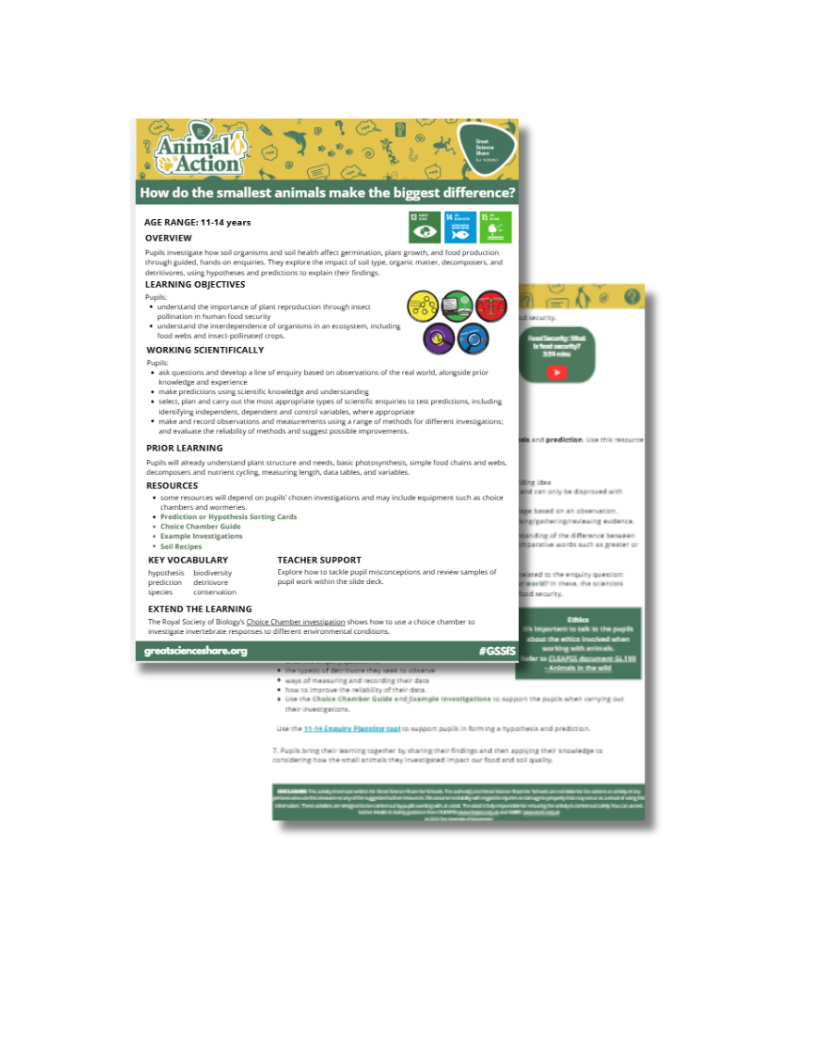
Pupils:
ask questions and develop a line of enquiry based on observations of the real world, alongside prior knowledge and experience
make predictions using scientific knowledge and understanding
select, plan and carry out the most appropriate types of scientific enquiries to test predictions, including identifying independent, dependent and control variables, where appropriate
make and record observations and measurements using a range of methods for different investigations; and evaluate the reliability of methods and suggest possible improvements
Pupils explore how soil organisms and soil health affect seed germination, plant growth, and food production through guided, hands-on investigations. They examine how soil type, organic matter, and decomposers influence germination, and investigate detritivore behaviour and decomposition, using hypotheses and predictions to plan and explain their findings.
Now jump to other 2026 Great Guided Enquiries and Enrichment Activities