Inspired by the book, ‘The Whispers Of Rock: Stories From The Earth’, by Dr Anjana Khatwa, Rock Reporters connects geology to everyday life. Supporting pupils to investigate where rocks come from, how they are used, and why they matter in local and global contexts, all whilst developing skills of recording and interpreting data and using scientific models.
The enquiry resources were developed in partnership with The Geological Society, The Royal Society of Chemistry and Ocean Generation.
Age: 5-7, 7-11, 11-14 years
Curriculum: recording and interpreting data and using scientific models; rocks.
Cross-curricular: geography and maths.

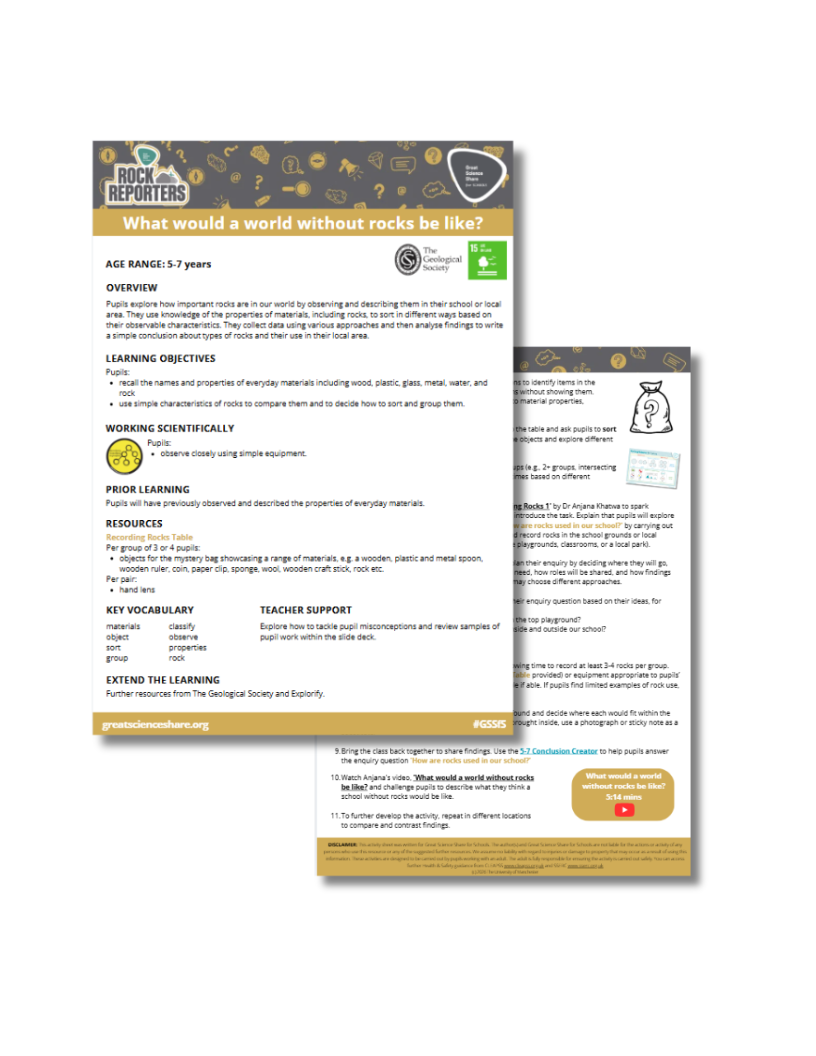
What would a world without rocks be like?
Pupils:
observe closely using simple equipment.
Pupils explore how important rocks are in our world by observing and describing them in their school or local area. They use knowledge of the properties of materials, including rocks, to sort in different ways based on their observable characteristics. They collect data using various approaches and then analyse findings to write a simple conclusion about types of rocks and their use in their local area.

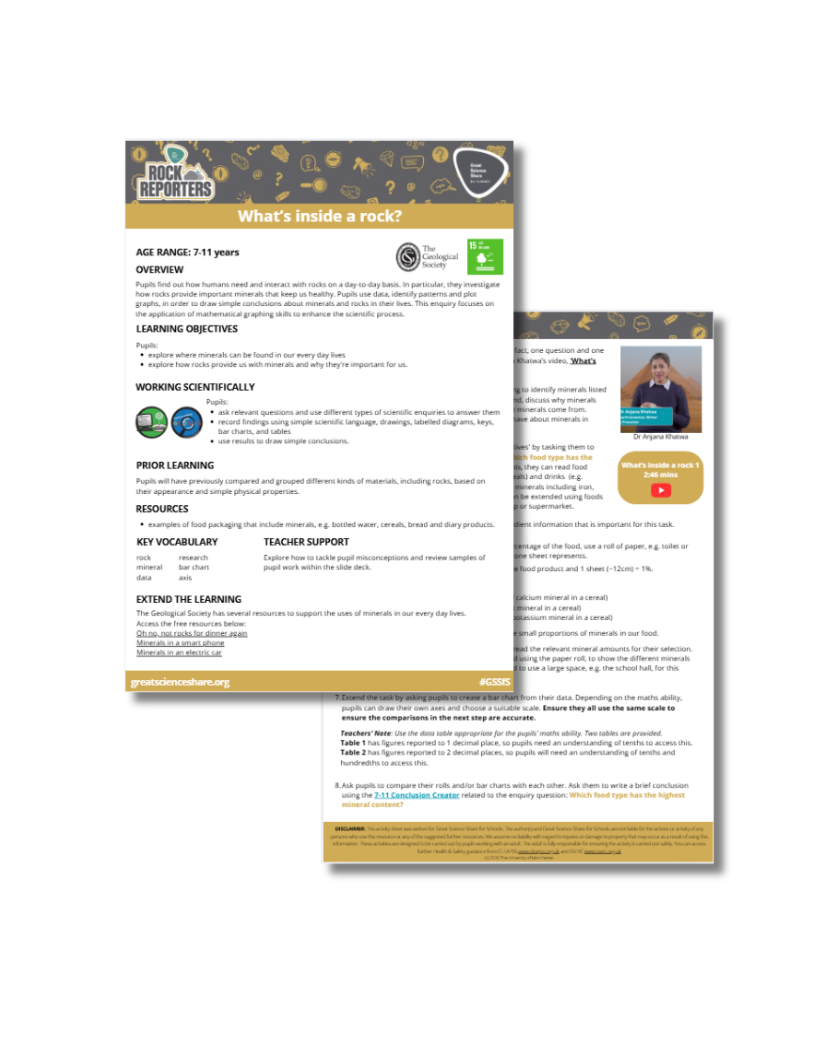
What’s inside a rock?

Pupils:
ask relevant questions and use different types of scientific enquiries to answer them
record findings using simple scientific language, drawings, labelled diagrams, keys, bar charts, and tables
use results to draw simple conclusions.
Pupils find out how humans need and interact with rocks on a day-to-day basis. In particular, they investigate how rocks provide important minerals that keep us healthy. Pupils use data, identify patterns and plot graphs, in order to draw simple conclusions about minerals and rocks in their lives. This enquiry focuses on the application of mathematical graphing skills to enhance the scientific process.

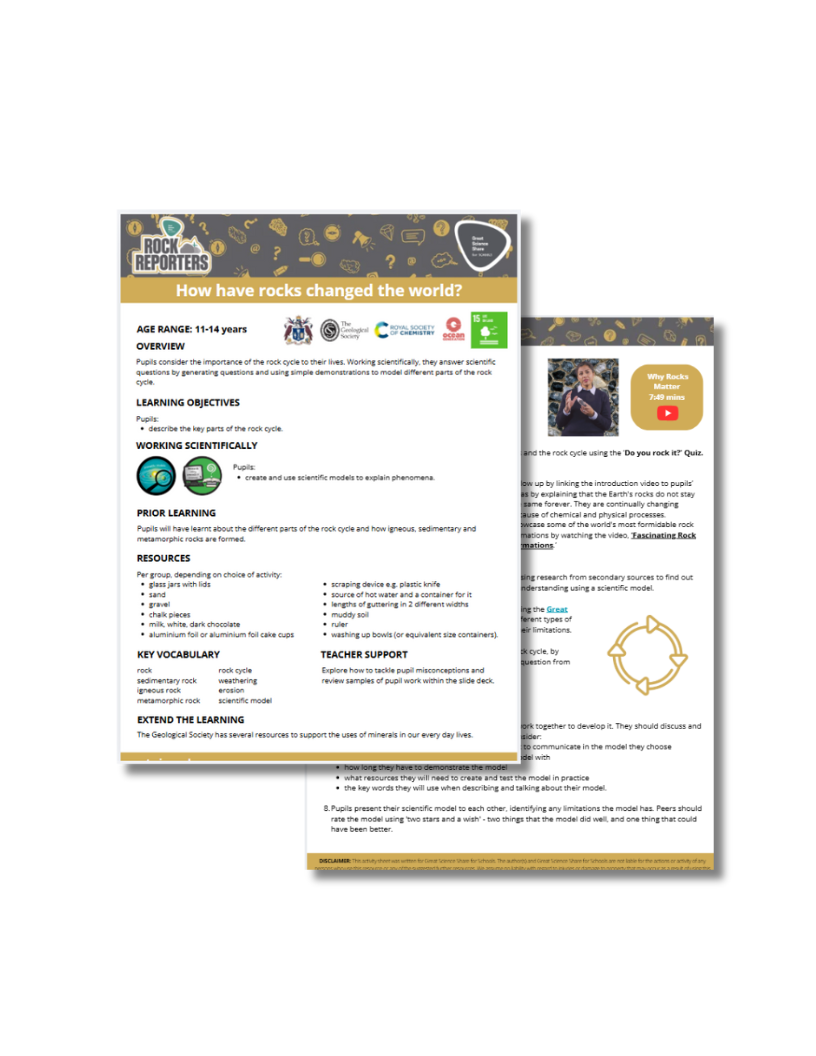
How have rocks changed the world?

Pupils:
create and use scientific models to explain phenomena.
Pupils consider the importance of the rock cycle, exploring the cultural and personal significance of rocks. They answer questions using scientific models to demonstrate understanding and communicate aspects of the rock cycle. They consider the benefits and limitations of the models they use.
This Great Guided Enquiry was funded by the Worshipful Company of Glass Sellers.
People from many backgrounds are members including those working with glass in some format or people who have an interest in collecting glass.

The Geological Society is the UK’s professional body and learned society for geoscience, supporting and informing both scientists and the public. They provide a wide range of free educational resources to engage young people with geoscience.
The Royal Society of Chemistry provides resources to help teachers inspire future generations of scientists and policy work to drive positive change in curricula and qualifications. Access their education website here.
Ocean Generation translate complex ocean science into engaging content to nurture an inclusive approach to sustainability, run through three UNESCO endorsed Ocean Literacy programmes for 3-25-year-olds. Access their resources here.
Now jump to other 2026 Great Guided Enquiries and Enrichment Activities