Inspire pupils to ask, investigate and share scientific questions with Racetrack to Road whilst exploring the concept of forces through the context of motorsport. Pupils consider the forces acting on a car and investigate how they can reduce them to enhance the performance of the car. Working scientifically, they develop skills in recording and interpreting data.
Age: 5-7, 7-11, 11-14 years
Curriculum: recording and interpreting data; making predictions; forces.
Cross-curricular: maths

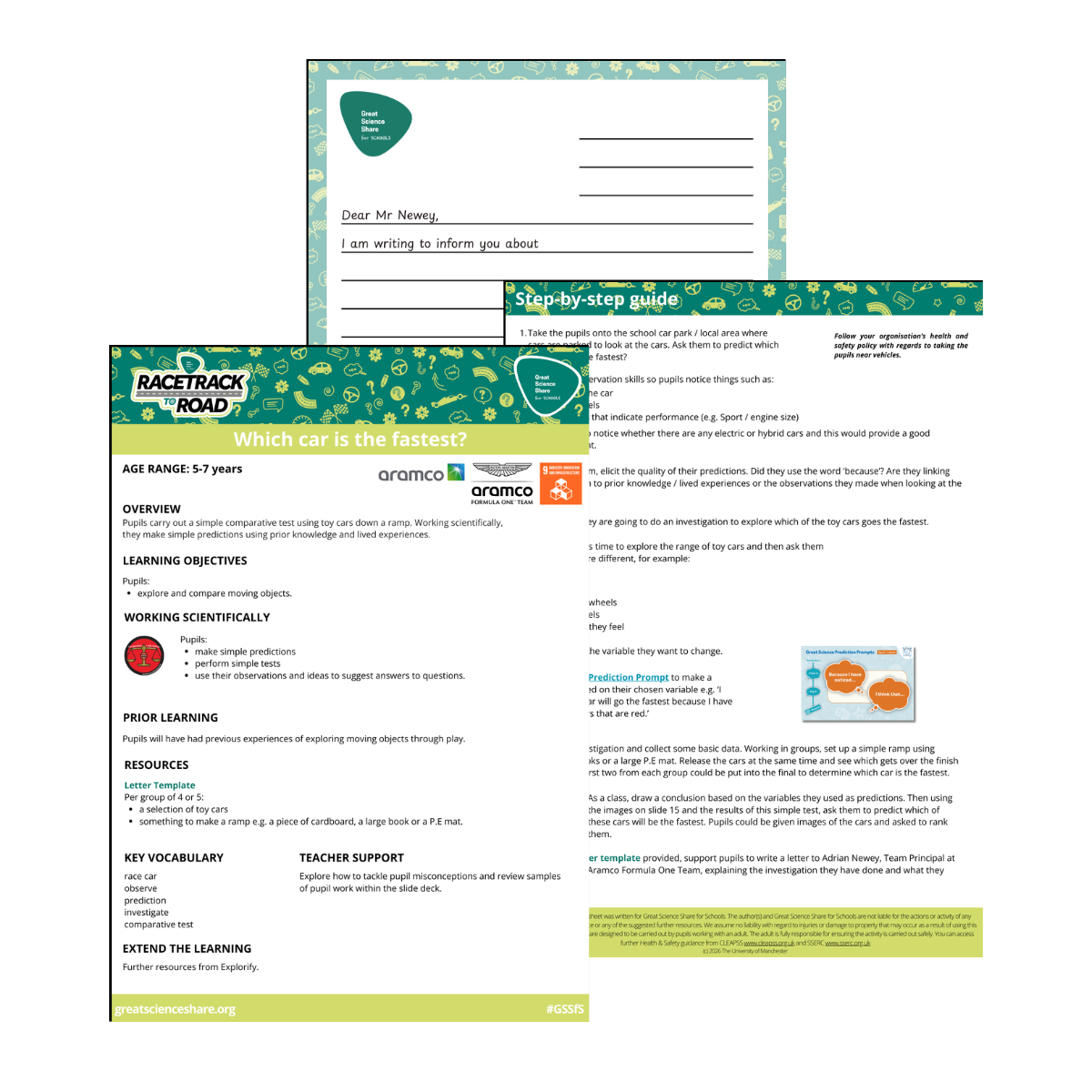
Which car is the fastest?
Pupils:
make simple predictions
perform simple tests
use their observations and ideas to suggest answers to questions.
Pupils practise the skills of observation and carry out a simple comparative test using toy cars down a ramp. Working scientifically, they make simple predictions using prior knowledge and lived experiences.

How can we reduce the amount of air resistance acting on a car?
Pupils:
record data and results using bar graphs
ask questions and develop a line of enquiry based on observations of the real world, alongside prior knowledge and experience
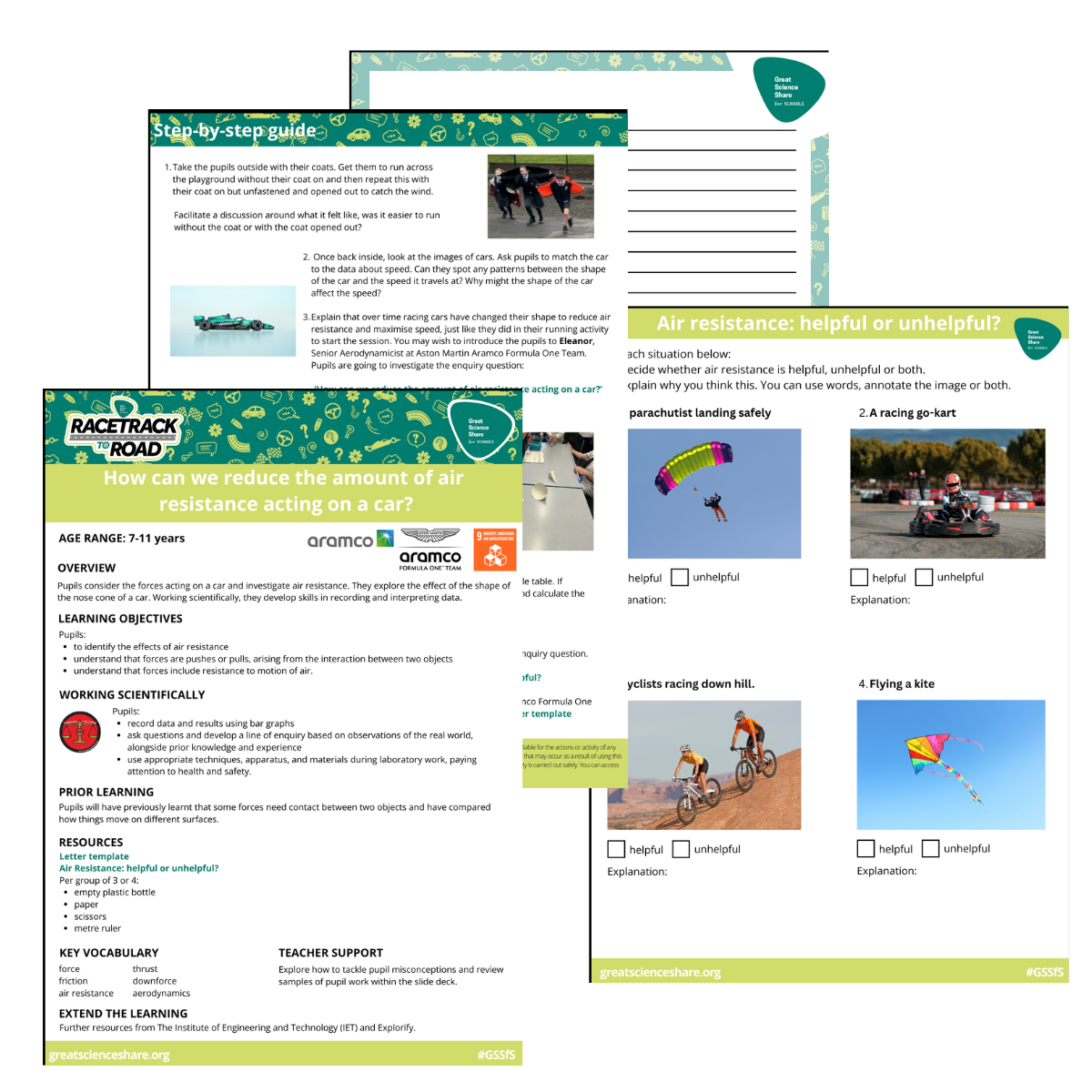
Pupils consider the forces acting on a car and investigate air resistance. They explore the effect of the shape of the nose cone of a racing car. Working scientifically, they develop skills in recording and interpreting data.

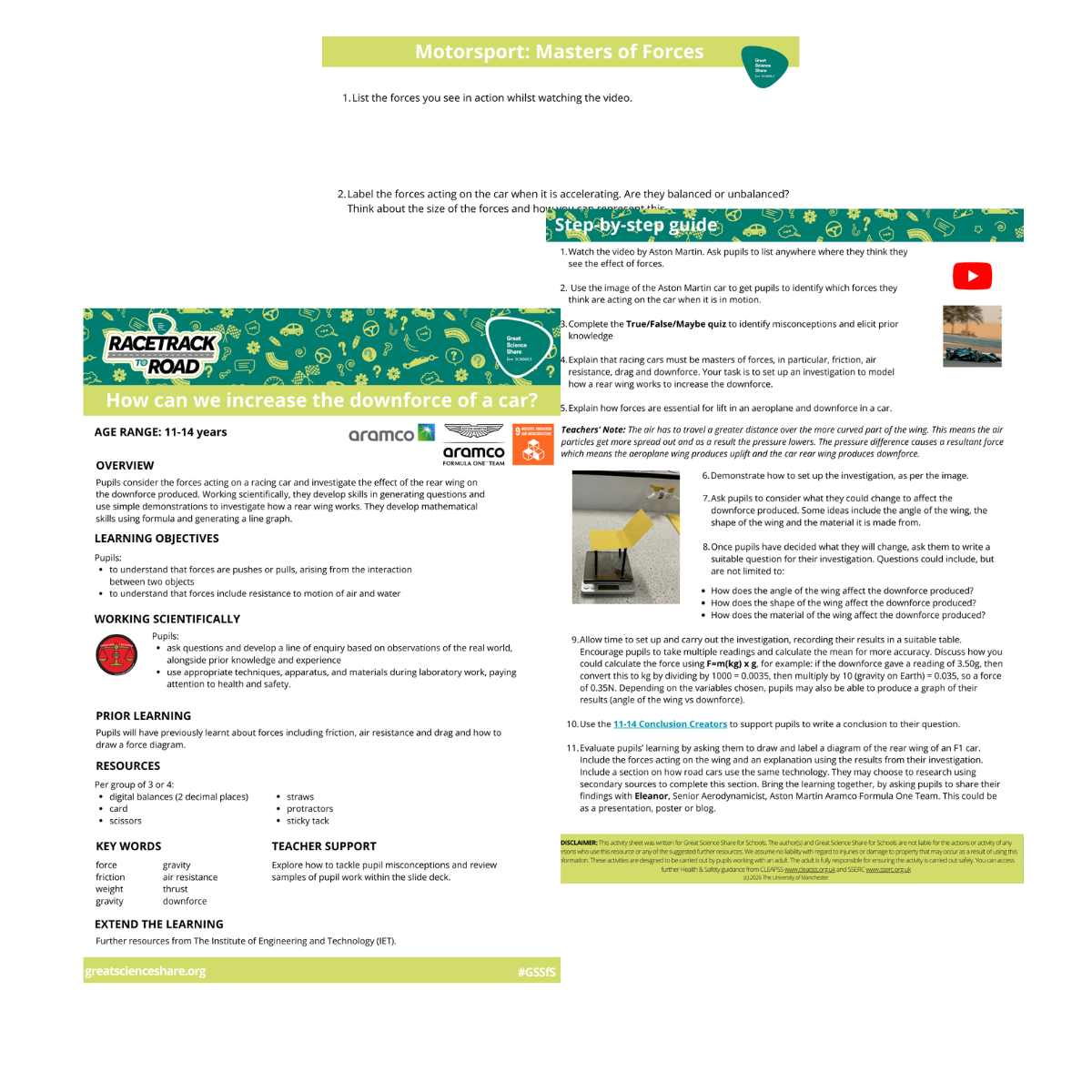
How can we increase the downforce of a car?
Pupils:
ask questions and develop a line of enquiry based on observations of the real world, alongside prior knowledge and experience
Pupils consider the forces acting on a racing car and investigate the effect of the rear wing on the downforce produced. Working scientifically, they develop skills in generating questions and use simple demonstrations to investigate how a rear wing works. They develop mathematical skills using formula and generating a line graph.
This Great Guided Enquiry was written in collaboration with Aston Martin Aramco Formula One team.

Want more resources?
Check out this careers chat of a Design Engineer working in the motorsport sector.
Real-world contexts to inspire your pupils to think about their future careers.
Now jump to other 2026 Great Guided Enquiries and Enrichment Activities